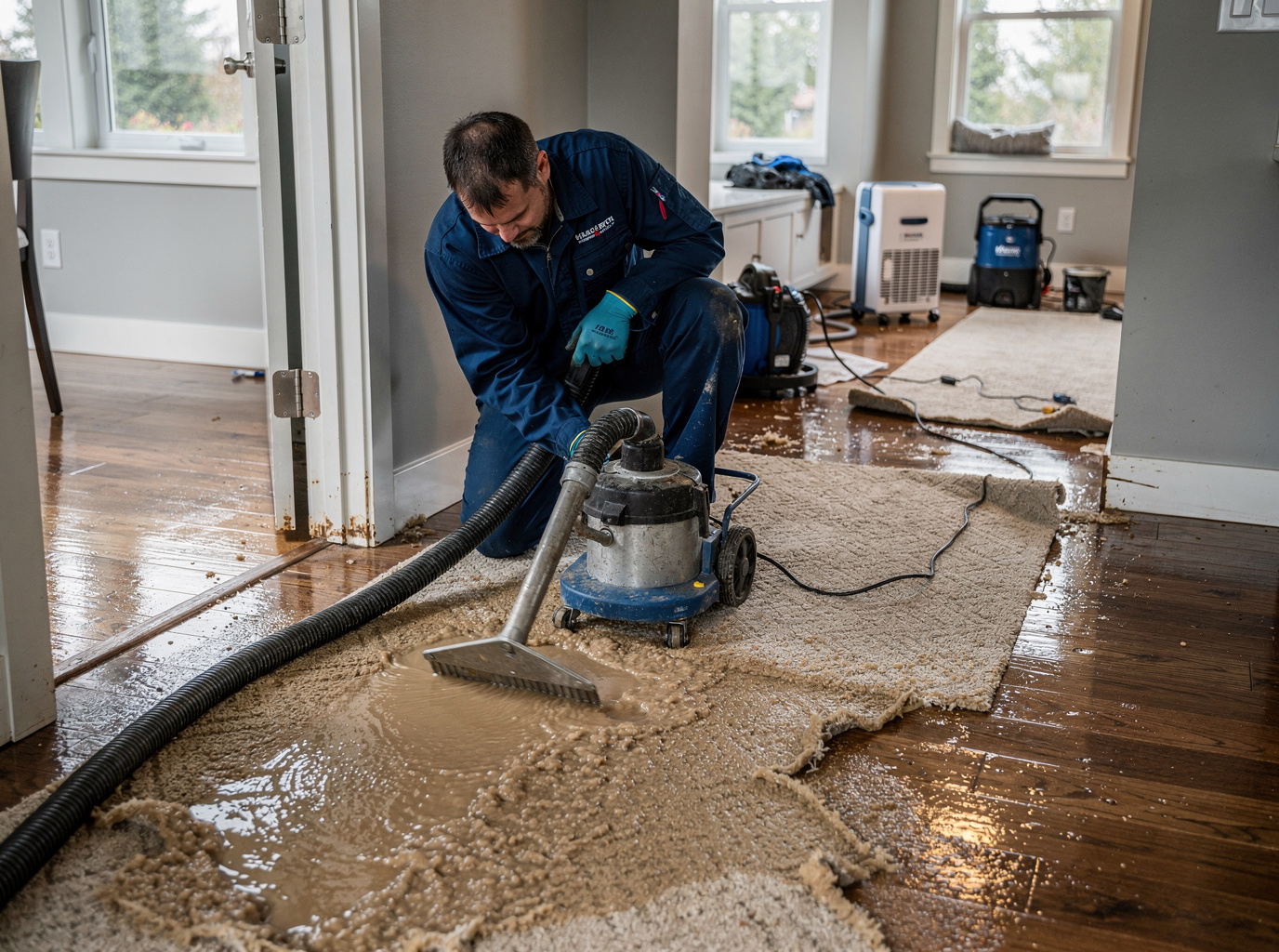
Washington's frequent rainfall and older housing stock in Kent and surrounding King County areas mean water often finds its way into crawl spaces, attics, and wall cavities of homes built before modern vapor barriers became standard. Technicians must account for how moisture travels through these structures, especially in split-level and ranch-style houses common here, where insulation can trap water against framing for weeks. Ignoring hidden saturation leads to repeated callbacks when mold sets in behind baseboards or under subfloors.
Edge cases include storm-driven water entering through failed window seals on south-facing walls or sewer backups during heavy rains that overwhelm older municipal lines in Kent. Restoration crews test moisture levels at multiple depths in drywall and flooring rather than relying on surface readings alone. Code considerations in King County require proper disposal of contaminated materials and documentation of drying logs when insurance claims are involved.
Homeowners often discover damage only after noticing musty odors or buckling hardwood in finished basements. In these cases, crews remove affected sections, apply antimicrobial treatments where needed, and use commercial dehumidifiers sized for the square footage and local humidity. Work continues until readings drop below 12 percent moisture content before any reconstruction begins.
Technician insight
In Washington, the thing that catches most people out with Water Damage Restoration Service is water that travels under the slab or into the crawl space under older Kent homes. Frequent rain keeps the ground saturated, so even a small upstairs leak can migrate downward and stay hidden until the subfloor starts to rot. Checking those low areas early changes the whole scope of the job.
Burst Supply Line in Kent Split-Level
A homeowner noticed water staining on the lower-level ceiling after a cold snap. Inspection found a failed pipe joint sending water into the wall cavity and across the crawl space. Crews extracted water, dried the framing for five days, and replaced the affected drywall and insulation before odors could develop.
Water Damage Restoration Service Services We Offer
✓Flood Water Extraction
Rapid removal of standing water from basements and ground floors in Kent homes after storms or main breaks using truck-mounted pumps and portable extractors.
✓Structural Drying Services
Placement of air movers and dehumidifiers to pull moisture from framing, subfloors, and insulation in Washington homes where crawl spaces stay damp year-round.
✓Ceiling and Wall Cavity Restoration
Access and drying of hidden water behind drywall and in attics common in split-level houses throughout King County after roof leaks or pipe failures.
✓Carpet and Hardwood Water Removal
Salvage or replacement decisions for saturated flooring materials, with specialized equipment to prevent cupping in older hardwood found in many Kent properties.
✓Sewage Backup Cleanup
Safe extraction and disinfection after sewer line overflows that occur during heavy rains in lower-lying neighborhoods around Washington, WA.
Water Damage Restoration Service Cost in Washington, WA
| Service | Typical Range | What Affects It |
|---|---|---|
| Water Extraction | $250–$750 | Varies with depth of water and access in crawl spaces versus finished rooms |
| Drying Equipment Rental | $150–$400 per day | Number of days required depends on home construction and local humidity |
| Drywall And Insulation Removal | $300–$900 | Affected linear footage and whether multiple rooms are involved |
| Sewage Cleanup Add-On | $400–$1,200 | Required when backups introduce biohazards that need certified disposal |
Ranges are typical for Washington, WA and confirmed with an exact written quote before any work starts.
How it works
- 1
Initial Assessment
Technicians inspect affected rooms, use moisture meters on walls and floors, and document all water sources before any work begins.
- 2
Water Removal
Standing water is extracted with pumps and wands, followed by removal of heavily saturated materials that cannot be dried in place.
- 3
Drying And Dehumidification
Equipment is positioned to circulate air and reduce humidity until moisture readings reach safe levels throughout the structure.
- 4
Sanitizing And Restoration
Treated surfaces are cleaned, then repairs such as drywall replacement and flooring reinstallation are completed to return the home to pre-loss condition.
Pricing
Costs depend on the volume of water, affected square footage, and whether contaminated materials require special handling; upfront quotes are provided after inspection.