2026-11-08 · Mike Ellison
Drying Out Hardwood Floors After a Washington Pipe Burst
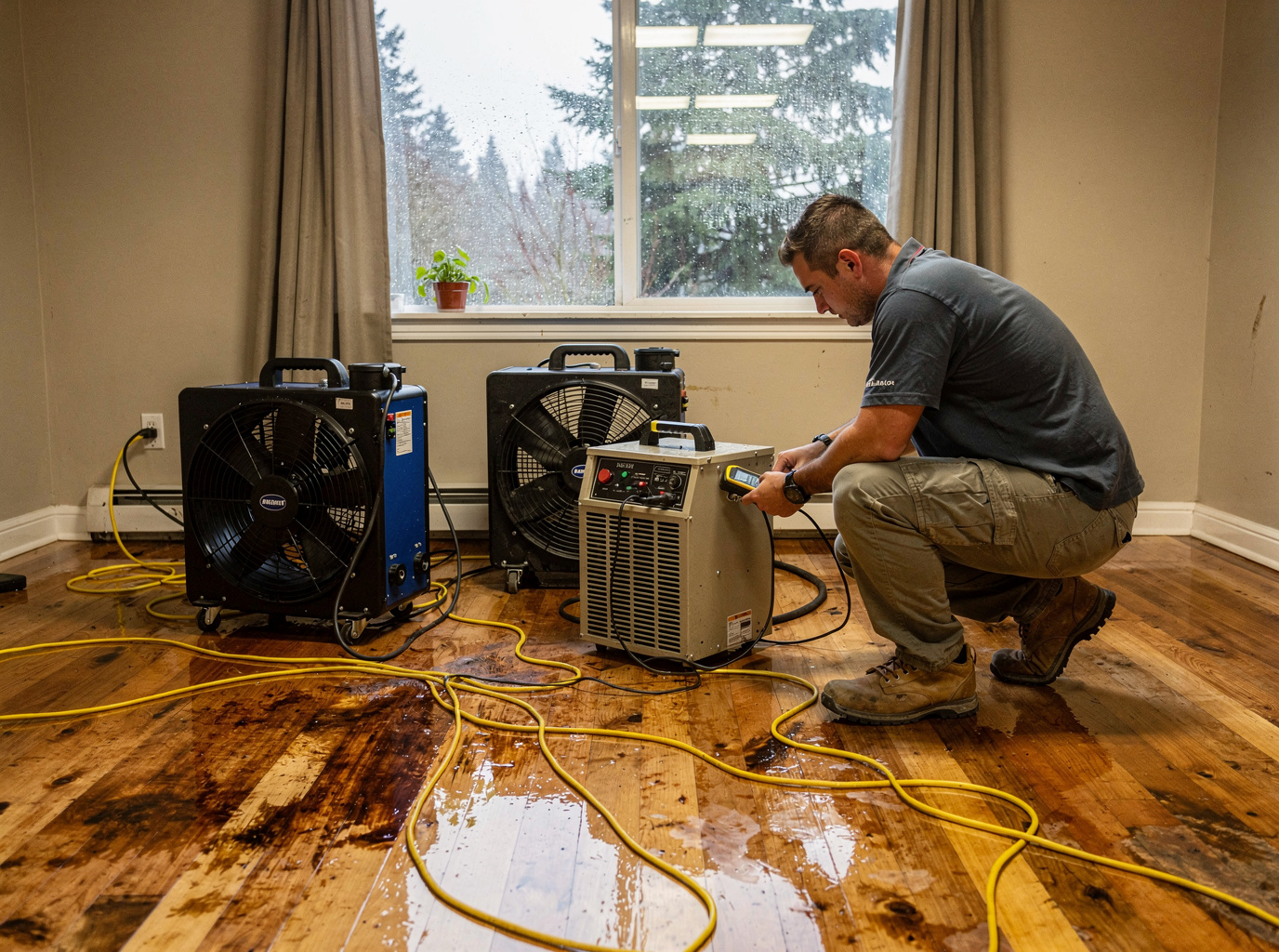
Drying hardwood floors after a pipe burst in Washington typically requires 5–10 days of controlled airflow and dehumidification when addressed within the first 48 hours, though older homes in King County often need 12–18 days if water sits under the subfloor.
Initial Assessment in Washington Homes
Start by locating the burst and shutting off water at the main valve, which many Kent properties from the 1970s still have in crawl spaces. Check for cupping or buckling along seams, especially in neighborhoods near the Green River where soil moisture stays high year-round. Lift a few boards at the edge to inspect the subfloor; if it feels spongy, the job expands beyond surface drying. Measure moisture with a pin meter at multiple points, aiming for readings below 12 percent before any refinishing. Homes built before 1990 in Kent often have oak or maple that absorbs water faster due to wider plank widths.
Removing Standing Water First
Extract visible water with a wet vac rated for at least 5 gallons per minute to limit further absorption into the grain. In Washington’s damp winters, run the extraction the same day the burst occurs because relative humidity above 70 percent slows evaporation. Move furniture and rugs immediately, then place air movers on the floor at a 45-degree angle to create cross-flow without pushing moisture deeper. Avoid household fans alone; they recirculate humid air common along the I-5 corridor. If the leak came from a second-floor bathroom, check ceilings below because water travels along joists in these older balloon-framed houses.
Setting Up Professional Drying Equipment
Position commercial dehumidifiers that pull 70–100 pints per day in each affected room, paired with low-grain refrigerant units when outdoor temperatures drop below 40 degrees. In Kent’s frequent November through February rain events, maintain indoor humidity at 35–45 percent to pull moisture from the wood without cracking it. Monitor daily with data loggers placed under the flooring if possible. For wider plank floors found in many 1960s–1980s homes near Kent Station, add floor mats with heat mats set to 80–90 degrees to speed capillary action. Never exceed 100 degrees or the finish may blister.
Link to related guidance on overall costs in the area when the drying phase extends beyond two weeks due to hidden moisture.
Monitoring and Preventing Mold Growth
Test moisture levels every 24 hours until the floor and subfloor reach equilibrium with the surrounding air. Washington’s mild but persistent dampness means mold can begin in as little as 48 hours behind baseboards or under cabinets. Remove and replace any wet insulation in adjacent walls, then treat exposed wood with an antimicrobial solution safe for hardwood. In homes near the Kent Valley, where groundwater sits close to the surface, install a small exhaust fan venting to the exterior to keep airflow moving after equipment is removed. Check for musty odors at the end of each day; if present, extend drying another 48 hours.
When to Call for Water Damage Restoration
If cupping exceeds 1/4 inch or multiple rooms are involved, professional water damage restoration becomes necessary to avoid total floor replacement. Technicians bring truck-mounted extraction and can access crawl spaces common under Kent ranch homes. The process includes negative air machines to contain spores during drying. For properties in surrounding cities like Auburn or Federal Way, travel time adds little because crews already work the I-5 corridor daily. Schedule follow-up visits at the 72-hour and one-week marks to confirm readings stay stable.